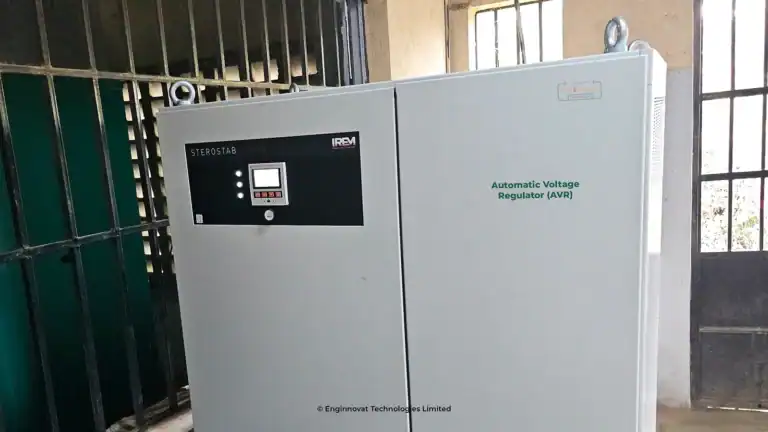
Severe Voltage Drops Diagnostics and Resolution
PHASE 1: THE CHALLENGE
The Invisible Power Thief: Downstream Voltage Drop
Let’s step back into the 2024 Audit Phase of our university case study. An audit is only complete when you trace the power all the way to the critical end-user equipment. Ultimately, what we found hundreds of meters downstream was severe voltage drops starving the campus IT infrastructure.
During peak operational hours, our Victron VRM Portal monitored a critical distribution board. This board directly powered the main server room. As a result, the logs painted a catastrophic picture (shown in the photo below).
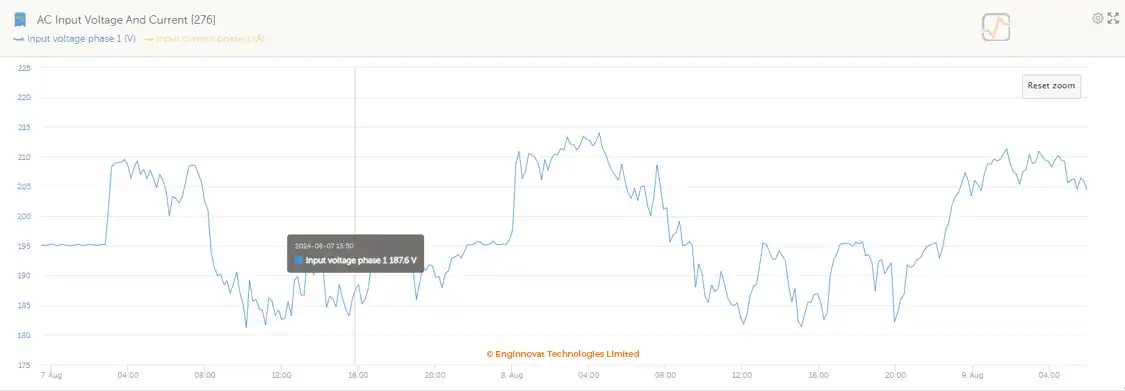
- Incoming Phase Voltage: ~220VAC
- Voltage Drop: Peak drop of 35V to 40V
- Terminal Voltage: Crashing to 180VAC at servers!
As the data shows, the terminal voltage at the servers lived consistently below the 200V safe operating limit. This massive voltage drop was the primary driver of the relentless server crashes and hardware failures the university was experiencing.
⚠️ “This entire setup was operating dangerously outside the BS 7671 / IEC 60364 Standard. The standard mandates that the voltage drop from the main switchboard must not exceed 5% of the nominal 240V supply (a maximum allowable drop of just 12V). Our recorded drops of up to 40V were more than triple the permissible limit!”
PHASE 2: THE ENGINEERING DIAGNOSIS
An Overloaded Infrastructure
Our audit revealed a classic infrastructure bottleneck. The university had expanded significantly over the years, but its electrical backbone had not. We identified three primary culprits:
- Undersized Main Cable: The main cable feeding multiple blocks was only 35mm² when it should have been at least 70mm².
- Compounding Cable Failure: A secondary cable to the server room was also undersized (10mm² instead of 25mm²), adding another 5V drop.
- Cascading Poor Connections: We noted a high likelihood of loose, dirty, or degraded connections along the entire distribution line.
PHASE 3: DIAGNOSTIC TESTING
Isolating the Root Cause: Diagnostic Testing
Following the critical 180V drops we discovered downstream, our engineering team needed to prove why those aging cables were experiencing such massive losses. We had to isolate whether the issue was a physical breakdown of the buried cable itself or purely high-resistance termination connections.
To get those answers, we coordinated a short, scheduled shutdown of the affected blocks.
Conductor and Insulation Health Checks
- Insulation Resistance (IR) Tests: We tested the buried sub-main cable cores to ensure no leakage to earth or between phases. The tester read "0L" (Over Limit / Infinite Resistance) across the 100m span, confirming the insulation was fully intact. Similar test results were recorded in the rest of the 350m cable run.
- Conductor Continuity Tests: We measured the physical resistance of the copper cores to check for internal degradation or thermal damage. We recorded a healthy, low reading of 1 ohm across the 100m run, proving the physical copper inside the cable was fully intact and healthy.
With the buried cables cleared by our tests, we proved that the massive voltage drop was not caused by internal cable damage.
Instead, our physical inspection confirmed that the extreme resistive losses were heavily driven by a secondary culprit: a series of loose, oxidized, and severely degraded connections. A prime example was a heavily rusted cutout point. This loose termination compounded the destructive effects of severe voltage drops downstream.
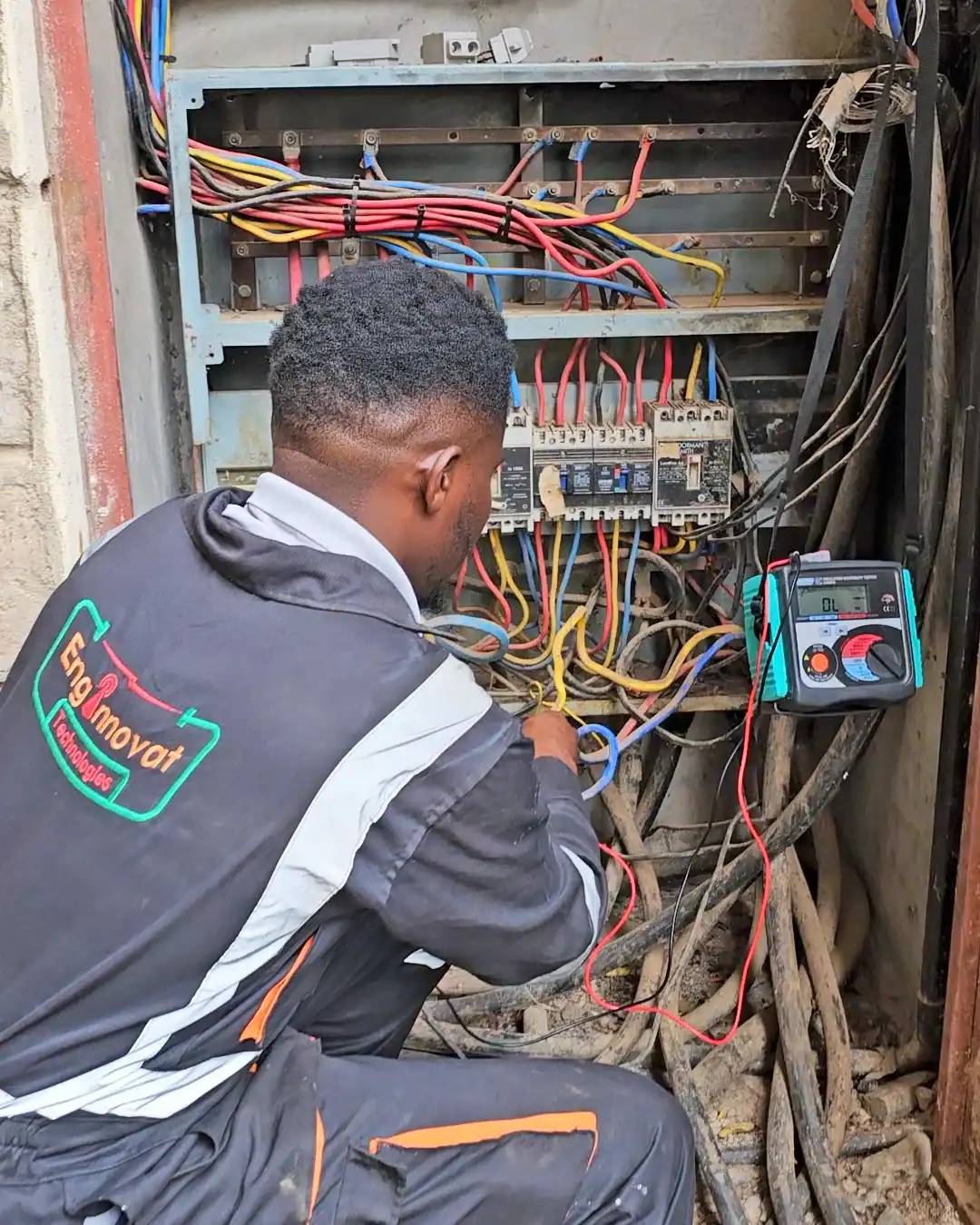
Rigorous On-site Diagnostics
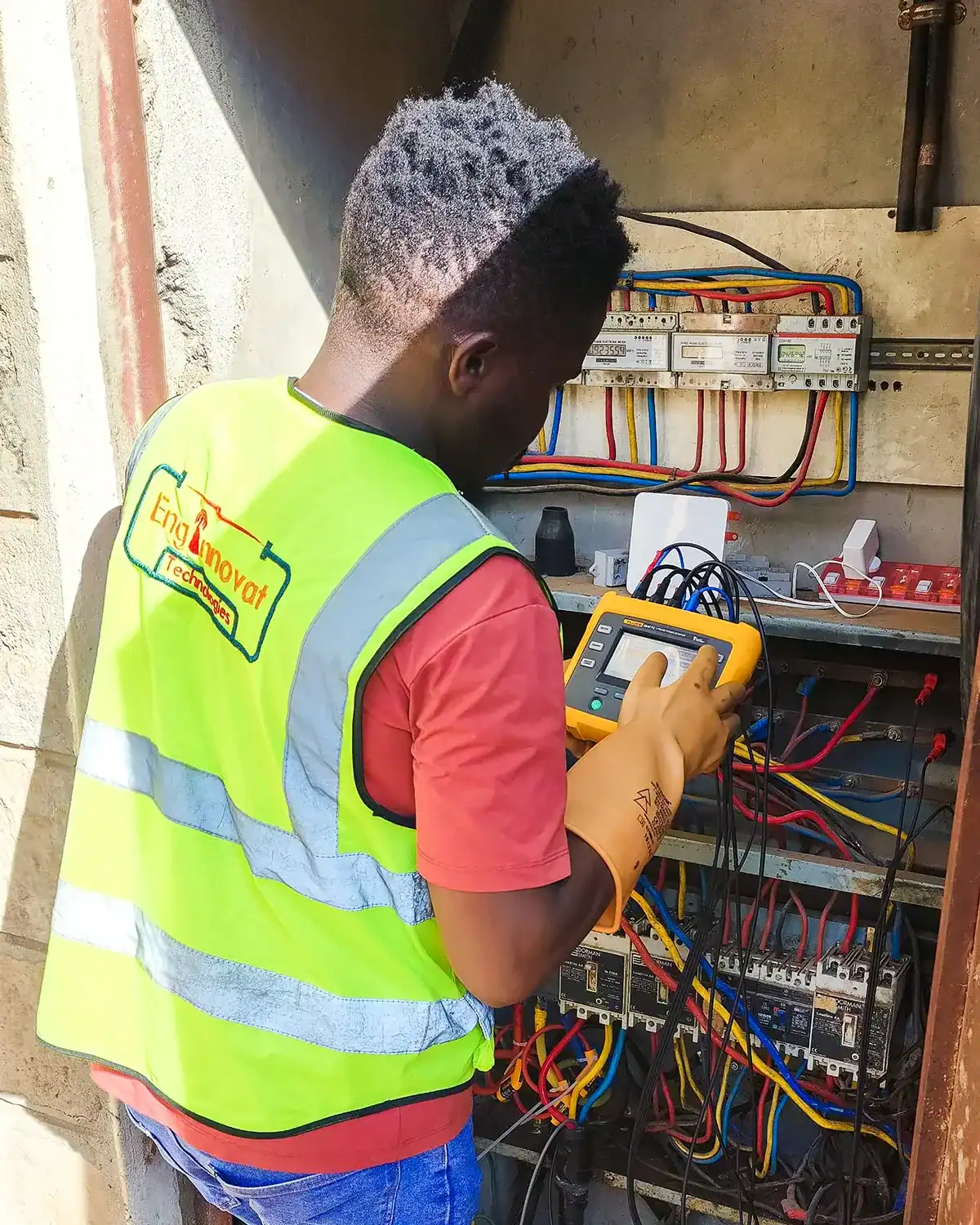
Our engineering team executing systematic testing during a scheduled facility shutdown to pinpoint the exact cause of severe voltage drops.
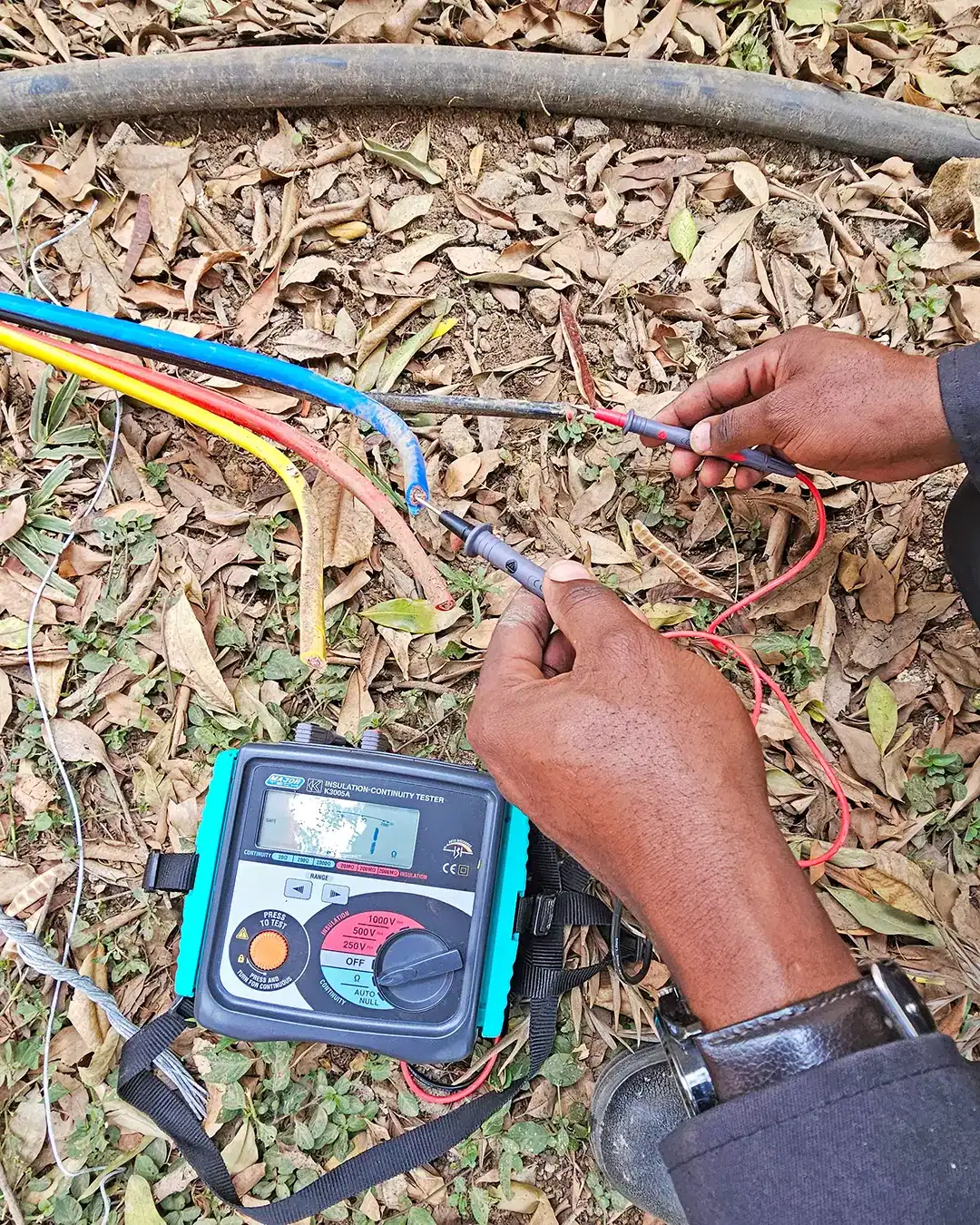
Copper Integrity Verified
Continuity testing over the 100m span recorded 1Ω (one ohm), proving the internal copper conductor was intact and undamaged.
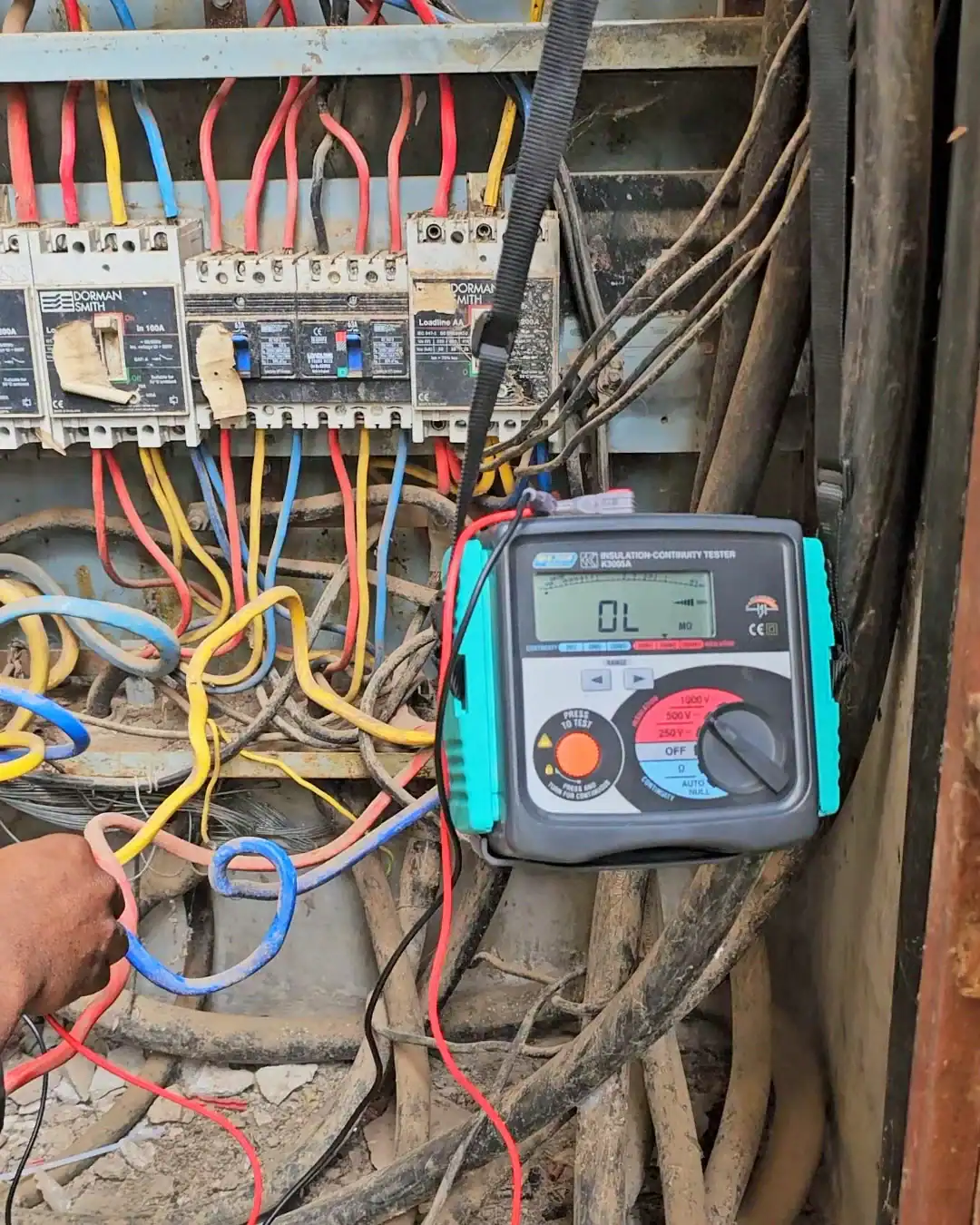
Insulation Health Check
Insulation Resistance (IR) tests returned an ‘0L’ (Over Limit) reading, confirming the buried cable had zero leakage between phases or to earth.
PHASE 4: EMERGENCY RECTIFICATIONS
Overhauling Connections to Resolve Severe Voltage Drops
A sensitive server room cannot wait months for major capital project approvals. Therefore, during this short shutdown, we executed an immediate, low-cost emergency intervention.
Our team systematically cleaned and re-dressed all loose neutral, phase, and earth connections along the entire distribution path. Following this, we firmly secured every termination to its specified torque limits, which included completely refurbishing the rusted cutouts shown below.
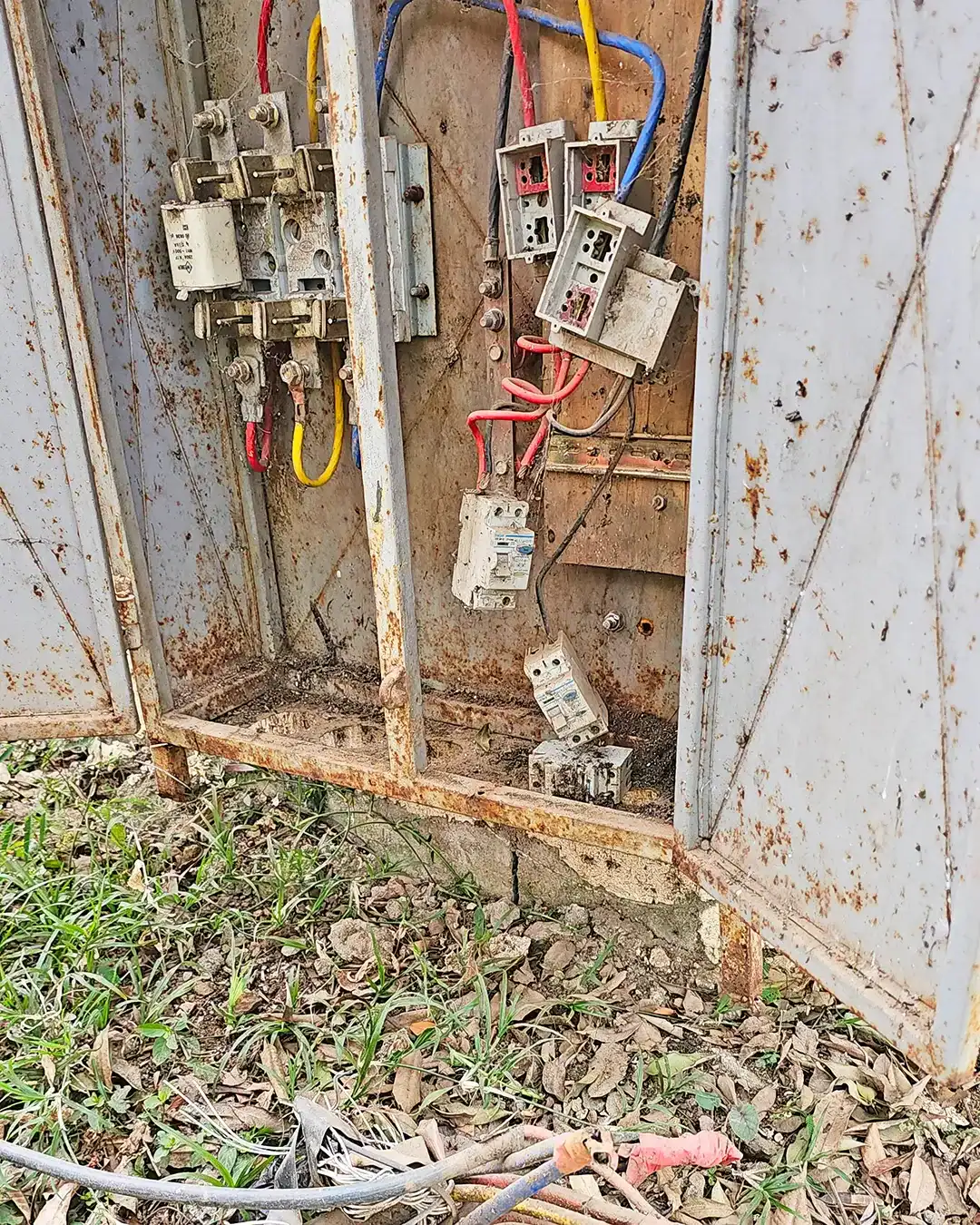
Before: Degraded Terminations
Physical inspection uncovered heavily rusted and oxidized cutout points. These loose connections severely compounded the downstream severe voltage drops.
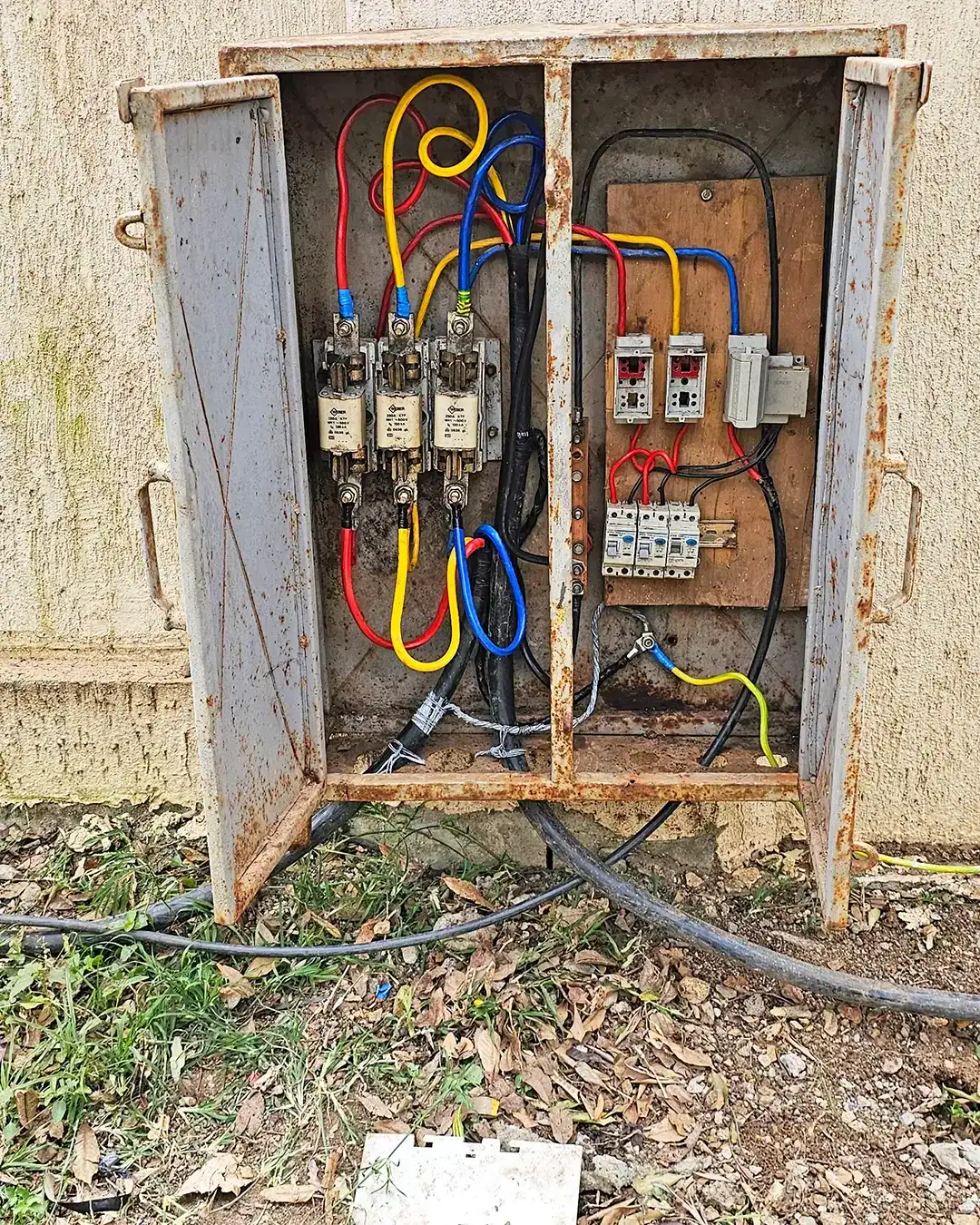
After: Emergency Rectification
The cutouts were completely refurbished. Our team systematically cleaned, re-dressed, and firmly secured the cables to guarantee zero-resistance connections.
PHASE 5: VERIFICATION & STABILITY
Immediate Recovery and Continuous Logging
By simply rectifying those poor connections, we clawed back enough lost voltage to push the server room safely above the 200V threshold. This essential temporary fix allowed their backup system to finally operate safely while we waited for the major capital upgrades to be approved.
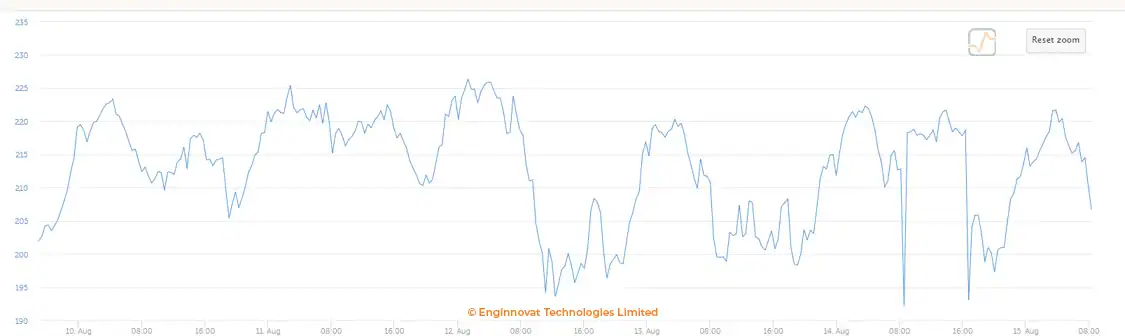
- Stabilized Baseline: The voltage now averages safely above the 200V threshold.
- Grid Fluctuations: The remaining peaks and troughs are no longer from internal faults but are a direct reflection of the unstable KPLC grid during peak and off-peak hours (before the AVR was installed).
- Grid Blackouts:The sharp, momentary drops to 0V represent complete KPLC grid blackouts, not equipment failures.
Continuous Monitoring & The Bottleneck
Even after the emergency rectifications were completed, our team continued live, on-site logging. Utilizing our Fluke meters, we closely monitored the power profile to verify system stability under the harshest peak-load conditions. This relentless verification ensured the facility remained fully protected while we waited for the major capital upgrades to be approved.
⚠️ But a temporary fix is never a permanent cure. The 35mm² sub-main cables were still a massive, undersized bottleneck for the growing campus. We knew that as daily operations peaked, the heavy electrical demand would continue to strain this aging infrastructure, pushing the voltage below 200V during peak hours.
Share this Case Study
YOUR ICT & POWER EXPERTS
Stop Guessing. Start Engineering.
A single loose connection or an undersized cable can quietly starve your most critical equipment of power. Stop treating the symptoms and diagnose the root cause. Secure your facility today with a professionally audited and designed electrical system.